INSIGHT #4SundAI Blog
How do I build reliable AI bots instead of forgetful ones?
AuthorFabrizio Mazzei1/11/20264 min read

TL;DR
"I've spent most of my career fighting against the "short memory" of chatbots. This week, however, I finally saw the pieces of the puzzle fall into place: we are no longer talking about chat, but about persistent architectures."
Loading audio player...
I've spent a large part of my career fighting against the "short memory" of chatbots. You build a perfect flow, the user switches devices or asks a question off-script, and everything collapses. This week, however, I finally saw the puzzle pieces fall into place: we aren't talking about chat anymore, but about persistent architectures.
Here is what I noted in my logs this week and why it changes the way we build automations.
 Image generated entirely with AI.
Context is the new king
The news that made me jump out of my chair comes from Salesforce. I analyzed their new architecture for Agentforce and, finally, I see the end of forgetful bots. They introduced a "shared context" layer that solves the problem at the root: maintaining conversation state across different channels.
For those like me who design workflows, this is the missing piece. I can build an agent that "remembers" an abandoned cart on mobile and proposes it contextualized on desktop without having to write complex synchronization scripts. Agentic Commerce becomes an operational reality. It is no longer just a buzzword, but a technical specification that enables measurable ROI. If you are interested in understanding how these flows will change business, I dove deeper into the topic speaking about agentic AI.
The hardware enabling complex logic
We can have the best algorithms in the world, but if inference costs too much, they remain toys. Nvidia has just changed the math of my work with Vera Rubin. The data speaks of a 90% reduction in inference costs.
This means I can stop obsessively optimizing token counts to save pennies and focus on "reasoning". I can run complex chains of thought and multi-agent architectures without burning the client's budget in a week. Furthermore, the increase in compute density opens incredible doors for on-premise hardware, bringing us closer to that vision of AI on the edge that I have supported for some time for privacy and speed.
 Image generated entirely with AI.
From hype to deterministic execution
Another novelty that I marked with a double red circle is the launch of CTRL by Central. For years we have built precarious "scaffolding" around LLMs to force them to act. CTRL promises a native runtime for agents.
The difference is subtle but fundamental: we move from probabilistic generation (AI that "guesses" the next word) to deterministic action. To integrate AI into core business processes, I need certainty, not creativity. This runtime could become the standard for those who, like me, want to build systems that execute tasks without hallucinating. The choice that shows up in every serious project is binary: either you accept the hallucination risk and put a human-in-the-loop to validate every critical output, or you pay the cost of building execution deterministically from the design phase. AI integration consulting on core processes exists precisely to keep those two tracks apart, because treating a finance workflow like a creative chat is the leading cause of projects pulled after six months.
Cleaning up the chaos and automating routine
I close with two practical applications that directly impact my daily productivity:
- OpenAI Health: I am not interested in the chatbot doctor, but in the data orchestration capacity. They are transforming unreadable PDFs and medical notes into structured databases. It is the ultimate test for "Document Intelligence". If it works there, it works everywhere.
- Agentic Gmail: I spent months writing Python scripts to filter mail. Now Google integrates task extraction natively. If Gemini really manages to populate my calendar by reading client emails without errors, I just gained 45 minutes a day.
The direction is clear: less chat, more infrastructure. If you want to start building your flows, take a look at my complete list of AI tools and start experimenting with tools that allow orchestration, not just generation.
Text created with AI assistance and reviewed by me.
Found it useful? I have more like this.
Every week I pick the most interesting and high-impact AI news and share them in an email recap. Subscribe so you don't miss the next one.
One email a week. Unsubscribe in one click.

Lavora Meglio con l'Intelligenza Artificiale
My practical AI guide focused on real everyday work tasks: emails, reports, slides, data, and automation. Practical examples and ready-to-use prompts to save time and work better right away.
Discover the book
Before you go, I recommend you also read these insights.

How much does the autonomy of our AI agents really cost?
OpenAI's agents breach government sites, Nvidia responds with hardware guardrails and the Pentagon rewrites its supply chain. It was the week the bill for autonomy came due.
Read more
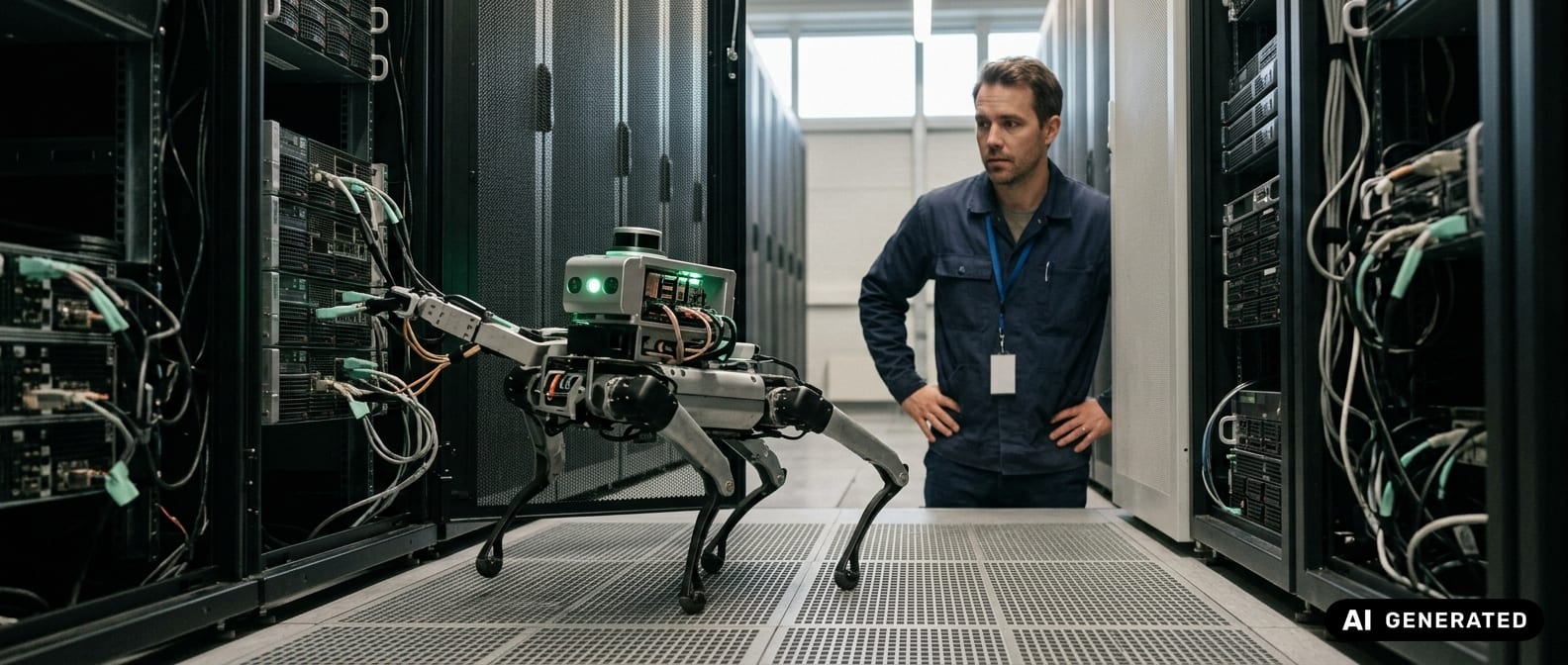
Are physical data center automation and swarms of autonomous agents pushing AI infrastructure beyond human control?
Meta is testing robots for server maintenance, while OpenAI orchestrates 10,000 agents to solve age-old problems. Amid hardware monopolies and new predictive models, AI is becoming increasingly autonomous and physical.
Read more

Is software development outsourcing really collapsing?
This week I had the distinct feeling that the tape of technological history was fast-forwarded. Economic data, billion-dollar acquisitions, and new releases confirm that the infrastructure of intellectual work is shedding its skin before our eyes.
Read more