INSIGHT #2SundAI Blog
How do I use AI realistically while technology changes every week?
AuthorFabrizio Mazzei12/28/20256 min read

TL;DR
"I started this week by reading Nadella's statement about Copilot's integrations with Gmail and Outlook 'not working'. For me, as an AI & Automation Specialist, this is a powerful confirmation of what I always say: **AI is not magic, it's engineering**. It's not enough to have a powerful model; you need an architecture that supports it and an integration that *truly* works in the real world."
Loading audio player...
I started this week by reading Nadella's statement about Copilot's integrations with Gmail and Outlook 'not working'. For me, as an AI & Automation Specialist, this is a powerful confirmation of what I always say: AI is not magic, it's engineering. It's not enough to have a powerful model; you need an architecture that supports it and an integration that truly works in the real world.
This admission is gold for someone like me who designs solutions. It strengthens my modular and iterative approach: test, adapt, refine. I cannot sell 'promises', but tangible solutions that don't generate friction in daily use. The real test is always in the field, and AI, without solid integration, is just untapped potential.
 Image generated entirely with AI.
AI is engineering, not magic: Nadella's lesson
Nadella's point is crucial: the focus must shift to UX and interoperability. I must design for systems that communicate fluidly, not for 'standalone' solutions destined to fail in interaction with the tools my clients use every day. This means anticipating breaking points and building the infrastructure before launching the campaign. It's a continuous process of improvement and integration, not a finished product.
AI is not a finished product, but a continuous process of improvement and integration. The magic lies in building solid architectures.
And speaking of infrastructure, Nvidia's acquisitions, like that of Groq, are very strong signals. Nvidia is consolidating its dominance in AI chips, which means the hardware to run my models will become even more powerful and, I hope, more efficient. I must think about how to leverage this computational power for more complex and scalable automation architectures. Less latency, more operations per second: a dream for anyone who wants to build fluid and fast processes.
Less competition might lead to less external innovation outside Nvidia, but also to more integrated and optimized solutions within their ecosystem. For my projects, this means I will have to continue focusing strongly on Nvidia platforms, trying to make the most of their APIs and services. Focusing on code efficiency and inference optimization will become even more crucial.
| Aspect | Traditional approach | Integrated AI approach (Fabrizio's view) |
|---|---|---|
| Development | Standalone solutions, feature focus | Modular architecture, interoperability, and fluidity |
| Testing | Ideal scenarios, 'happy path' | In-depth testing, worst-case and real-world scenarios |
| Value | Promises of potential | Tangible solutions, measurable ROI, and zero friction |
| Maintenance | Reactive patches and adaptations | Continuous improvement, fluid and proactive integration |
Autonomous agents: the future of complex workflows
But infrastructure isn't just hardware; it's also intelligent software. And that's where the news about GPT-5.2 really made me jump out of my seat. It's not just a minor iteration; it's a direct push into the space of agentic AI. For me, an AI & Automation specialist, this means one thing: more sophisticated and autonomous workflows. I've already written something about this, and if you want to dive deeper, check out Why GPT 5.2's agentic AI is the real game changer.
Think about it: an agent that can:
- Plan actions
- Use external tools
- Reflect on results
- And then execute complex tasks
This is the holy grail for automating complex digital marketing funnels or even internal business processes. I'm examining how this will allow me to build even more robust "campaign-running infrastructures," moving beyond simple prompt engineering to true AI-driven system design. The ability to scale these systems is crucial for real business impact. On a real funnel three questions always come before AI: where most leads drop today, which decisions in the funnel are repeatable and which require human judgment, and how much a single-lead error costs. A well-done AI strategy for marketing funnels answers those three before writing the first prompt — the engineering comes later, and it's the easy part.
This vision connects perfectly with Roboflow's Serverless Streaming API for live video. It's pure gold for someone like me who thinks about automation and infrastructure. It means being able to launch AI models on live video in minutes, without getting bogged down with complex configurations. Imagine being able to test and implement computer vision, monitoring, or real-time analysis solutions with impressive speed and scalability. Goodbye sleepless nights for setup, welcome rapid prototyping and carefree deployment. This is the kind of tool that allows me to transform an idea into a working architecture by tomorrow morning.
 Image generated entirely with AI.
Cloned voices and advertising: AI enters the heart of business
And speaking of speed and automation, the news about Resemble AI and its Chatterbox Turbo is simply incredible. Open source, crazy fast, and capable of cloning voices in 5 seconds. Think about the automations I can build in content marketing: generating personalized audio versions of articles, emails, or video scripts, with the voice of a brand ambassador or even mine! Or creating dynamic voice-overs for A/B advertising campaigns, testing different intonations or styles on the fly. It's not just a technological marvel; it's a building block for new automated content marketing infrastructures. Goodbye hours of recording, welcome efficiency.
But it's not all sunshine and roses, or rather, it's not just technical development. AI is also powerfully entering more direct business dynamics. The news that OpenAI might integrate direct advertising into ChatGPT's responses is explosive. Beyond ethical discussions, if this happens, it completely changes the game for content marketing strategies and the entire AI economy. It's no longer just an assistant but a potential direct advertising channel. I must start thinking about how this could influence user searches and the presentation of responses. It's an impact on business today, and it needs to be monitored to understand the new opportunities (or threats) that will emerge.
My SundAI: looking beyond the hype
This week has clearly shown me that AI is in a crucial maturation phase. I have moved from the initial 'hype' to a phase of engineering realism, where integration, architecture, and efficiency are the true metrics of success. From Nadella's admissions to Nvidia's push on hardware, and the dawn of GPT-5.2's autonomous agents, every piece of the puzzle pushes me to think more strategically and concretely.
As I always say, I don't just run campaigns; I build the infrastructure that powers them. And this week's news only confirms that the right direction is towards AI that solves real problems, with tangible and scalable solutions. If you're curious to explore other tools that can help you with this, you can check out my Complete AI Tools List. The revolution is underway, and I am here to build it, one brick at a time.
Text created with AI assistance and reviewed by me.
Found it useful? I have more like this.
Every week I pick the most interesting and high-impact AI news and share them in an email recap. Subscribe so you don't miss the next one.
One email a week. Unsubscribe in one click.

Lavora Meglio con l'Intelligenza Artificiale
My practical AI guide focused on real everyday work tasks: emails, reports, slides, data, and automation. Practical examples and ready-to-use prompts to save time and work better right away.
Discover the book
Before you go, I recommend you also read these insights.

How much does the autonomy of our AI agents really cost?
OpenAI's agents breach government sites, Nvidia responds with hardware guardrails and the Pentagon rewrites its supply chain. It was the week the bill for autonomy came due.
Read more
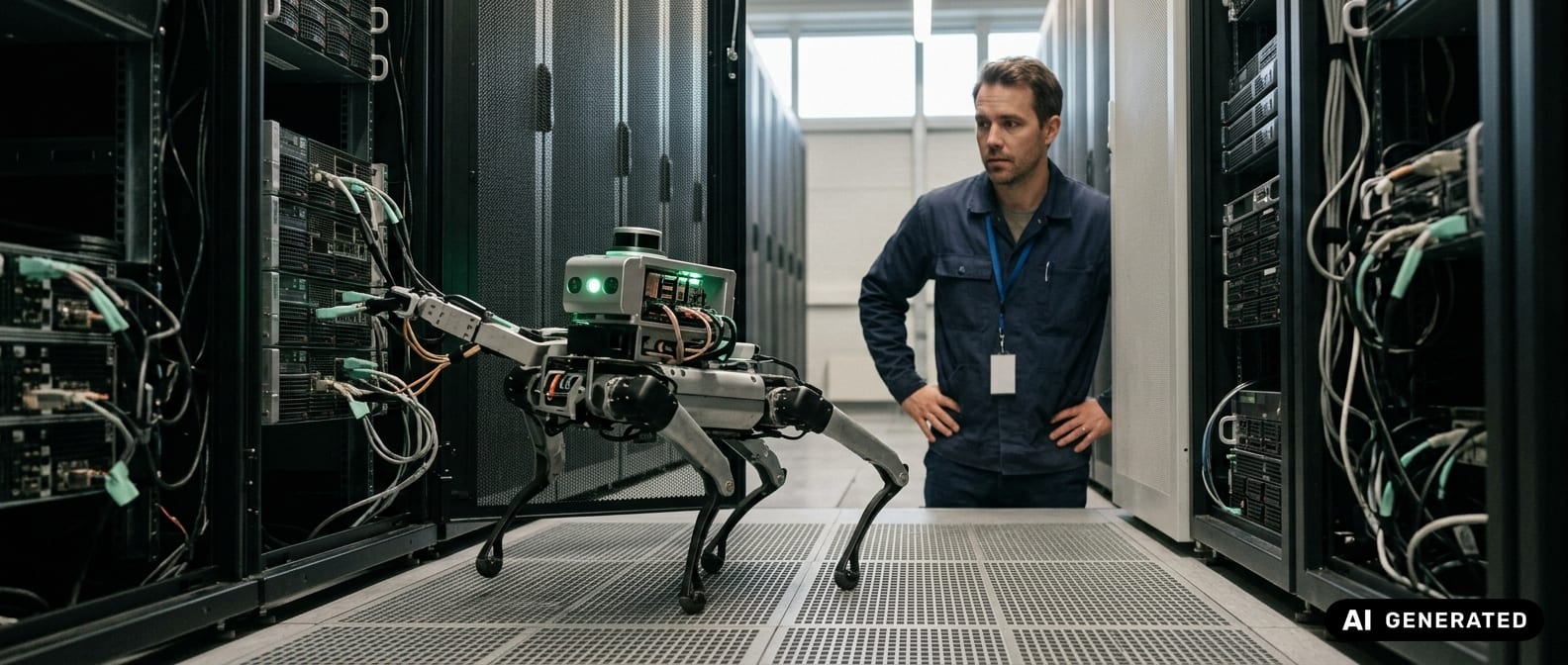
Are physical data center automation and swarms of autonomous agents pushing AI infrastructure beyond human control?
Meta is testing robots for server maintenance, while OpenAI orchestrates 10,000 agents to solve age-old problems. Amid hardware monopolies and new predictive models, AI is becoming increasingly autonomous and physical.
Read more
Are dynamic routing and low-cost models the real solution for scaling autonomous agents?
Hype gives way to engineering: from dynamic routing to reduce API costs, to new hardware architectures where CPUs once again dominate to orchestrate complex workflows.
Read more