INSIGHT #30SundAI Blog
Will the collapse of inference costs and new autonomous agents make artificial intelligence scalable?
AuthorFabrizio Mazzei7/12/20268 min read

TL;DR
"Operating costs are collapsing thanks to the moves by Meta and Grok, while new autonomous agents promise to eliminate technical debt. We analyze how to transform AI from an infrastructure cost into a real business lever."
Loading audio player...
The artificial intelligence ecosystem is going through a phase of profound rationalization. The transition from purely text-based chat interfaces to background orchestration systems is now a reality. The trend of the week shows a market that stops chasing the hype of the moment to focus on two fundamental metrics: the reduction of inference costs and the operational stability of complex workflows.
Foundation models are becoming increasingly capable of handling structured tasks, but the real revolution is taking place at the infrastructural level. The optimization of token prices and the fragmentation of the offering finally allow for the design of sustainable automations on a large scale.
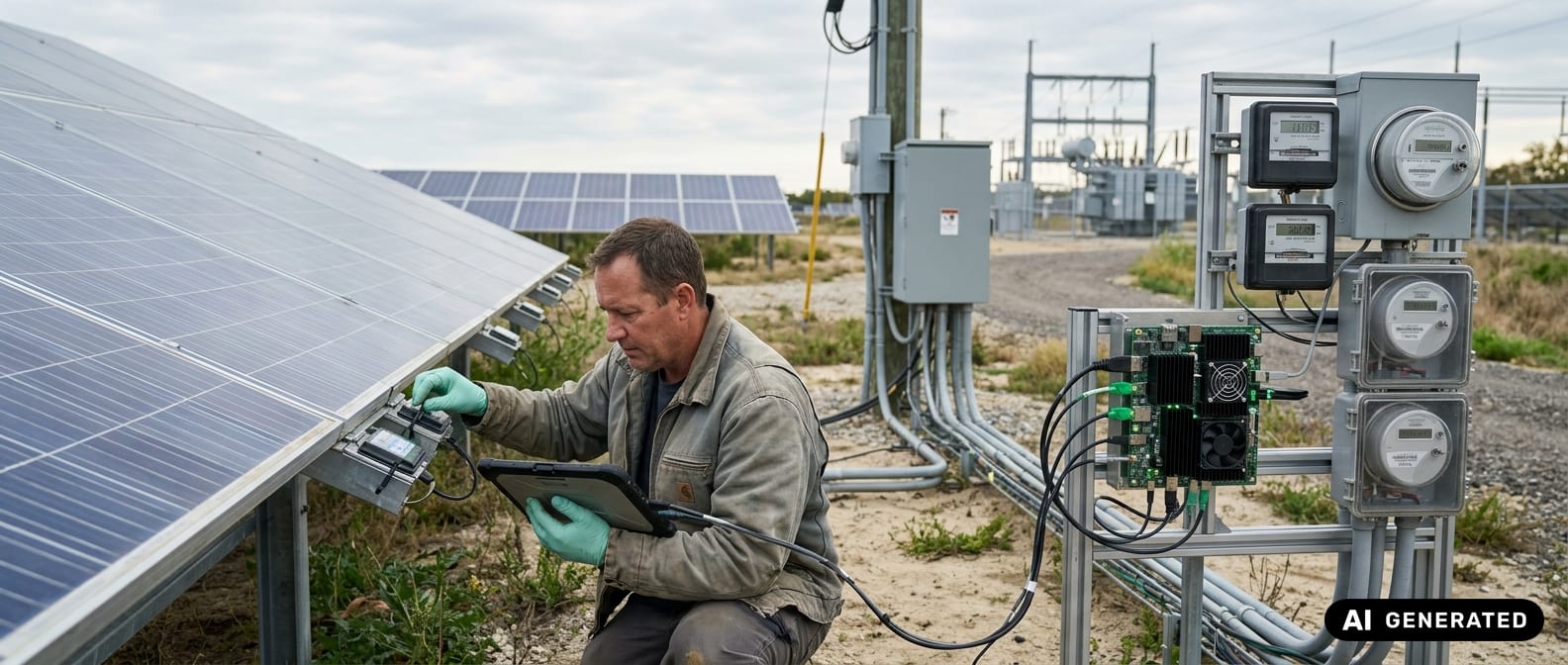
 Image generated entirely with AI.
Is the death of traditional software really near?
In 2023, ChatGPT plugins were presented by marketing as the ultimate revolution for human-machine interaction. Today, Greg Brockman of OpenAI openly admits the failure of that approach, outlining a completely different route toward the development of true autonomous AI agents. The long-term goal envisions an invisible digital layer, a "zero-interface" virtual delegate capable of acting on behalf of the user without requiring continuous manual input.
The reality on the ground, however, remains very far from this technological utopia. Enterprise adoption still requires a huge amount of prompt engineering, hyper-structured APIs, and rigorous data control. Asking whether AI agents are truly autonomous is the first step to understanding that software does not disappear, but simply changes shape. The integration of these models requires an obsessive management of system exceptions.
"The magic agent that understands everything on its own and solves problems without a solid software architecture behind it remains pure science fiction."
The practical response to this need materializes with the release of the GPT-5.6 family by OpenAI, declined into the Sol, Terra, and Luna tiers. This fragmentation of the offering is brilliant from an engineering perspective: it allows scaling operational costs based on the real complexity of the task. In parallel, the introduction of ChatGPT Work, a Codex-based agent designed to operate autonomously for hours on platforms like Google Drive and Salesforce, raises the bar toward persistent and independent automation.
How much does artificial intelligence really cost in production?
The real numbers of generative artificial intelligence paint an unequivocal picture of market dynamics. The State of the AI Economy 2026 report by Exponential View calculates a 110 billion dollar economy in revenues over the last twelve months. The distribution of value, however, tells a very specific story: 82% of revenues end up in the servers of cloud providers and hosting services, while only 11% goes to the creators of foundation models. What does this mean for your company? It means that optimizing AI spending is not an option, but a strategic priority to ensure project sustainability. Careful analysis allows for identifying where the highest costs lie and how to intervene, building a concrete action plan for effective AI cost management.
Corporate budgets reflect exactly this dynamic: almost the entire IT budget is spent on tokens and computing capacity. Most companies limit themselves to experimenting, keeping technology spending at a minimal fraction of overall budgets for fear of overrunning costs. The fundamental lever of the sector lies in price elasticity: data shows that every 10% drop in token cost generates up to 18% more usage volume.
Microsoft has perfectly understood this structural inefficiency, initiating a radical transition. The company is reducing its dependence on the high-cost external APIs of OpenAI and Anthropic, implementing its own proprietary models from the MAI family within Excel, Outlook, and GitHub Copilot. The financial goal aims to drastically cut operational expenses, shifting the workload to compact and super-specialized models for routine vertical tasks.
Designing systems based on dynamic routing and low-cost models becomes the absolute standard for anyone wanting to scale AI solutions in production, routing calls to the cheapest model capable of solving a specific operation.
Will the collapse of API prices change the rules of the game?
Competition on inference costs has seen a brutal acceleration in recent days. The release of Grok 4.5 by xAI positions the model very close to industry leaders like Fable 5 and GPT-5.5 in agentic tasks, but with a fraction of the operational cost: just 2 dollars per million input tokens and 6 dollars for output.
Executing complex operations at such low costs suddenly makes multi-agent workflows scalable that were prohibitive just a few weeks ago. The benchmarks by Artificial Analysis confirm excellent performance in the "Coding Agent Index", highlighting how the model uses far fewer tokens on average to complete a single task. However, there is a critical tradeoff: the hallucination rate in general tests reaches 54 percent, making the insertion of rigid validation layers within workflows absolutely mandatory.
 Image generated entirely with AI.
In parallel, Meta has opened public preview access to its Model API, making Muse Spark 1.1 available. For the first time, the company introduces a paid tier for API calls, aiming straight at the enterprise market with aggressive pricing and a fundamental native compatibility with OpenAI libraries.
This infrastructure allows for integrating the model into existing technology stacks simply by changing the endpoint, without wasting resources on lengthy code refactoring. The focus of Muse Spark 1.1 shifts distinctly toward agentic workloads and coding functions, offering a solid infrastructure to reduce hallucinations in operational loops.
Will legacy code automation solve the technical debt problem?
The software development world is undergoing an unprecedented technical evolution thanks to the architectural reasoning capabilities of new systems. An exemplary use case comes from a Google DeepMind developer who used Claude Code in combination with the Fable 5 model to perform a complete port of the 2003 strategy video game Command & Conquer.
The process required minimal human supervision to translate the original PC code into a native and functional application for iPhone and iPad, generating the first operational build in just 40 minutes. Porting a twenty-year-old graphics engine to a modern ARM architecture requires a deep understanding of complex hardware dependencies and obsolete memory logic.
This milestone suddenly renders old, slow, and expensive approaches to manual refactoring obsolete. Advanced tools like these lower the barrier for recovering abandoned software and updating critical banking or industrial systems. Entire corporate ecosystems could be migrated to modern architectures in a short time, finally tackling the age-old problem of technical debt that blocks innovation in many large enterprises.
Confirmation that assisted development is the real battlefield of the decade comes from the acquisition of the Cursor editor by SpaceX for a staggering 60 billion dollars. Artificial intelligence proves it can win in the real market only when it is natively integrated into daily work tools, transforming the simple text editor into an autonomous orchestration environment.
What are the most interesting news and tools of the week?
In addition to the major strategic movements on foundation models, the open-source ecosystem and research labs have released fundamental updates for those building practical solutions and data pipelines.
News not to be missed:
Stopping the use of plain text in RAG systems almost completely eliminates hallucinations, proving that input optimization and semantic structuring beat the brute force of the generative model.
Alibaba classifies Claude Code as high-risk software and bans it for employees, highlighting growing and legitimate concerns about the security of code generated by unsupervised external agents.
AI answer engines are progressively replacing traditional market research, shifting value from manual data aggregation to real-time contextual synthesis.
The granular controls introduced by Cloudflare now allow for selectively blocking AI bots, giving website owners back technical control over indiscriminate web scraping.
A new federated learning algorithm accelerates model development, allowing distributed training on edge devices without compromising the privacy and security of local data.
Mistral officially enters the robotics sector with an 8B model capable of driving physical hardware using a single camera, drastically optimizing the computing resources needed on board.
Tools to keep an eye on:
sqlite-utils 4.0rc2: the essential command-line utility for manipulating SQLite databases receives a massive update with native schema migration, largely generated automatically via Claude Fable.
Ellf Beta: a platform and virtual assistant focused on NLP development, specifically designed to refine programming agents in building customized information extraction solutions.
YOLO26: the twenty-sixth iteration of the famous visual framework by Ultralytics offers object detection, instance segmentation, and pose estimation entirely in real-time.
SmolVLM2-2.2B: an extremely compact and high-performing vision model designed for advanced video processing directly on a single consumer GPU.
Roboflow Auto Labeling: a serverless pipeline structured to run no-code multi-VLM flows on massive image sets, slashing the preparation and cleaning times of visual datasets.
ZCode: an AI development environment created by Zhipu AI, based on the GLM-5.2 model, featuring extensive context management capabilities at a fraction of the cost of Western competitors.
To explore other technical resources and libraries useful for integrating these systems, you can consult the AI tools available on the site and evaluate how to include them within your software architectures.
Text created with AI assistance and reviewed by me.
Found it useful? I have more like this.
Every week I pick the most interesting and high-impact AI news and share them in an email recap. Subscribe so you don't miss the next one.
One email a week. Unsubscribe in one click.

Lavora Meglio con l'Intelligenza Artificiale
My practical AI guide focused on real everyday work tasks: emails, reports, slides, data, and automation. Practical examples and ready-to-use prompts to save time and work better right away.
Discover the book
Before you go, I recommend you also read these insights.

How much does the autonomy of our AI agents really cost?
OpenAI's agents breach government sites, Nvidia responds with hardware guardrails and the Pentagon rewrites its supply chain. It was the week the bill for autonomy came due.
Read more

Who writes the rules of AI while labs self-regulate and inference costs plummet?
OpenAI postpones the IPO and big labs sign up for a standards body, while Cohere talks about a cartel. Meanwhile, agents go local and a classifier without output tokens changes the cost calculation.
Read more
Will the collapse of inference costs offset the enormous energy consumption of autonomous agents?
While autonomous agents devour energy and tokens, fierce open-source competition is driving down API prices. How to optimize AI architectures to stay scalable.
Read more