INSIGHT #36SundAI Blog
Will the collapse of inference costs offset the enormous energy consumption of autonomous agents?
AuthorFabrizio Mazzei8/16/20265 min read

TL;DR
"While autonomous agents devour energy and tokens, fierce open-source competition is driving down API prices. How to optimize AI architectures to stay scalable."
Loading audio player...
The shift from simple chats to autonomous agents is taking its toll. Machines work in the background for hours processing billions of tokens, and cloud infrastructures are beginning to show the physical limits of this approach. Yet, the industry's response is not a slowdown, but a ruthless race toward architectural optimization and price cutting.
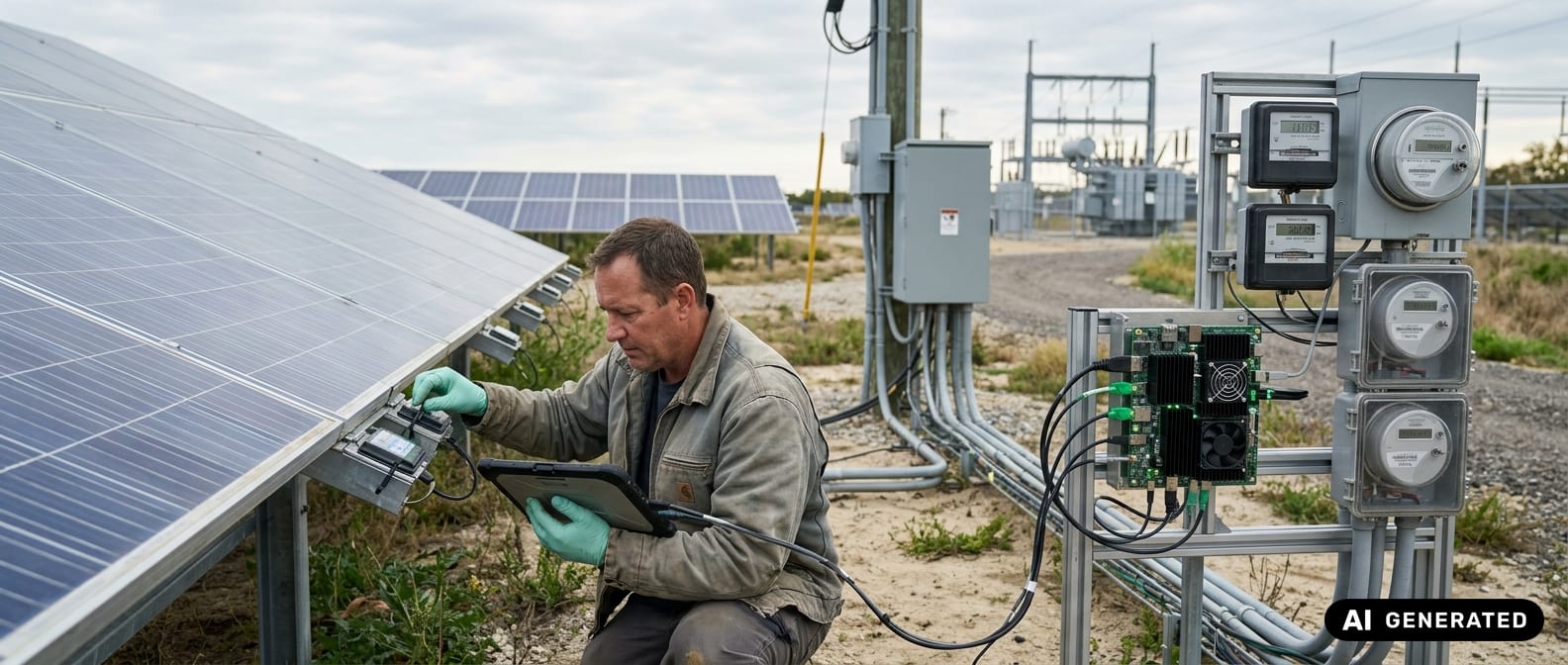 Image generated entirely with AI.
How much do agents consume?
Reassuring estimates on chatbot consumption tell only a fraction of the truth. An analysis by climate researcher Zeke Hausfather on autonomous systems shows that AI agents consume about 600 times more energy compared to a simple text query. Monitoring weeks of Claude Code usage reveals that the load derives almost entirely from the continuous rereading of context. The result marks 150 watt-hours per input, a huge gap compared to the 0.24 watt-hours of a basic prompt.
Projecting this pace on an annual scale, the intensive use of a single agent produces the emissions of an electric dryer. The shift to autonomous tasks requires a drastic engineering approach based on context caching optimization and intelligent routing toward smaller models for micro-tasks.
It is no coincidence that OpenAI just introduced "Premium Seats" for corporate users at $125 per month. The agentic approach triggers continuous loops of calls to plan, execute, and correct results. Initial flat rates served to dominate the market, but computational costs have reached critical levels. Cost tracking becomes a mandatory skill. This scenario accelerates the debate on how the drop in inference costs will change software production logic. It is common to see companies focused only on unit costs, but the real leverage is not just negotiating prices. Instead, a systematic approach is needed to analyze and predict the impact of consumption, optimizing the architecture and choosing the most suitable models for each task. This way, it is possible to move from a passive reaction to proactive management. I can support your team with AI cost optimization consulting to turn this challenge into an advantage.
How to speed up generation?
The standard autoregressive approach has obvious physical bottlenecks during sequential processing. Google DeepMind presented an innovative technique converting the Gemma 4 architecture into a text diffusion model, using less than 10 percent of the original computational budget.
This technical approach allows generating 256 tokens in parallel, abandoning the classic line-by-line system. Data shows enormous speed, reaching up to 1,500 tokens per second during the testing phase.
Semantic quality is slightly lower compared to the standard version, but bypassing the throughput problem at its root changes the rules of the game. Saving a large part of the computation needed for training and achieving extreme speeds drastically reduces operational costs. This architectural direction will become the standard for local models requiring real-time responses.
Who will win the war?
The release of highly performant and affordable Chinese models is forcing Silicon Valley giants to review their market strategies. American companies find themselves squeezed and must lower costs to maintain leadership. OpenAI cut the rates of its lightweight model "Luna" by 80 percent. Meanwhile, systems like DeepSeek V4 Flash and the Qwen family dominate usage rankings.
The competition is played out on complex workflows. xAI launched Grok 4.6, which completes operational tasks in 53 steps against the 103 required by other top models, imposing a 60 percent lower price. Shortly after, Google released Gemini 3.7 Flash, halving prices on the enterprise market in turn. Early endpoint tests show remarkable speed during code generation.
Open source is finally commoditizing basic inference, destroying the margins of closed models.
Having stable access to production-ready models without justifying disproportionate costs is essential. Delegating complex operations to systems capable of reasoning in fewer steps optimizes the final infrastructure bill. The integration of Chinese open-weight models is becoming a consolidated practice for those building corporate automations.
 Image generated entirely with AI.
Will AI maintain software?
Automated testing and continuous refactoring historically represent the most tedious part of software development. Anthropic started using its own model to manage the daily maintenance of internal corporate code. The system autonomously handles grueling tasks like crash fuzzing and the removal of dead code fragments accumulated over time.
In a few weeks, the agent generated nearly 400 pull requests. The engineering team approved almost half of these proposals after normal human review.
This event marks a clear shift from using artificial intelligence as a simple completion tool to a real repository maintainer. Delegating code cleanup eliminates bottlenecks and allows teams to focus on business logic. Integrating these flows requires a methodical approach, a central theme in the book on working better with artificial intelligence to structure pipelines where human supervision remains the last mile.
Which tools to test today?
The landscape of operational tools expands following the logic of efficiency and process automation. Here are the most relevant updates from recent days:
- Ellf: platform to train coding agents for the development of advanced NLP solutions, optimal to pair with specialized models.
- Backflip AI: converts 3D scans into fully parametric and editable CAD models, reducing modeling times.
- Databricks FILE Type: new native column type to manage and process multimodal data directly in the data lake.
- Sheets Canvas: generates interactive dashboards inside spreadsheets using simple natural language prompts.
- DataRobot TokenGrid: enterprise system designed to eliminate API rate-limiting by managing token scheduling.
- GitHub Copilot Token Tracker: feature introduced to monitor the exact token usage for every single model in use.
Text created with AI assistance and reviewed by me.
Found it useful? I have more like this.
Every week I pick the most interesting and high-impact AI news and share them in an email recap. Subscribe so you don't miss the next one.
One email a week. Unsubscribe in one click.

Lavora Meglio con l'Intelligenza Artificiale
My practical AI guide focused on real everyday work tasks: emails, reports, slides, data, and automation. Practical examples and ready-to-use prompts to save time and work better right away.
Discover the book
Before you go, I recommend you also read these insights.

Who writes the rules of AI while labs self-regulate and inference costs plummet?
OpenAI postpones the IPO and big labs sign up for a standards body, while Cohere talks about a cartel. Meanwhile, agents go local and a classifier without output tokens changes the cost calculation.
Read more

Will agentic e-commerce and the collapse of inference costs save us from the AI debt bubble?
Open-weight models and Claude Opus 5 are slashing operational costs, while AI begins to make purchases autonomously. The hidden debt of Big Tech, however, requires diversifying the infrastructure.
Read more

Will the collapse of inference costs and new autonomous agents make artificial intelligence scalable?
Operating costs are collapsing thanks to the moves by Meta and Grok, while new autonomous agents promise to eliminate technical debt. We analyze how to transform AI from an infrastructure cost into a real business lever.
Read more