What changes when GPT enters defense and Claude improves memory?
AuthorFabrizio Mazzei3/1/20263 min readINSIGHT#11

TL;DR
"The Pentagon validates LLMs for classified networks while Claude's memory transforms coding workflows. We are moving from simple chatbots to complex operating systems that redefine infrastructure and costs."
Loading audio player...
This week I saw two worlds collide: military rigidity and the fluidity of code that writes itself. Looking at my notes, the common thread isn't hype, but infrastructure. We are moving from "chatbots" to complex operating systems.
Here is what I’m taking home and how my work changes starting Monday.
 Image generated entirely with AI.
OpenAI, the Pentagon and the security standard
The news that OpenAI is entering the Pentagon while Anthropic is leaving for ethical reasons must be read through the eyes of an architect, not a politician. Beyond the headlines, this deal technically validates the use of LLMs in "classified networks" environments.
Why do I care? Because if a model is deemed secure enough to handle sensitive defense data, the barrier to entry for banks and corporations collapses once and for all. I am already imagining how this will accelerate agentic ai projects in regulated sectors, where until yesterday compliance was an impassable wall.
Claude’s memory and code that doesn’t break
I spent the weekend testing the new Claude Code feature on persistent memory and the impact was immediate. Anyone who uses the Cursor method like I do knows how frustrating it is to have to explain the context again in every session. Now, the AI remembers previous fixes.
I fixed some database logic and, two hours later, Claude applied the same pattern to a new module without me saying anything. This is true self-healing code. We are no longer talking about an assistant suggesting syntax, but a junior engineer learning from my commits.
Add to this the new feature in VS Code: agents now "see" the browser. I was able to ask the AI to analyze an unclickable button and the agent inspected the DOM exactly as I would have. Debugging time plummeted vertically.
 Image generated entirely with AI.
Visual automation and boring reporting
On the other front, Nano Banana 2 has changed the game for asset generation. The speed of this model allows me to insert image creation directly into application pipelines without absurd latency. I am already imagining systems that generate dynamic UIs in real-time for the user, maintaining a visual consistency that was previously impossible without specific training.
But the real pragmatic victory of the week is Claude controlling Excel and PowerPoint. I intend to automate weekly client reporting by Tuesday. If I can get data to pass from a pivot table to a slide without errors, I recover that 30% of time I currently lose on formatting. This is the real value: removing the grunt work to focus on strategy. Half of the AI report automation projects I've followed in the last year started exactly here: where a full reporting cycle used to take half a day of copy-pasting, now a pipeline runs overnight and by morning the file is ready with the anomalies already flagged. That measured delta is what justifies the project to finance.
The DeepSeek variable and costs
I will close with a reflection on costs. The imminent arrival of an optimized DeepSeek is causing panic among the big American players. For me, having to justify every cent of API spending to clients, this is music to my ears.
If I can move heavy intelligence to open or low-cost models while maintaining performance, the entire architecture of RAG systems changes. We are entering a price war phase that will make advanced AI accessible even for low-margin processes. I am already preparing containers to test local inference: if it works, my stack changes radically.
Text created with AI assistance and reviewed by me.
Found it useful? I have more like this.
Every week I pick the most interesting and high-impact AI news and share them in an email recap. Subscribe so you don't miss the next one.
One email a week. Unsubscribe in one click.

Lavora Meglio con l'Intelligenza Artificiale
My practical AI guide focused on real everyday work tasks: emails, reports, slides, data, and automation. Practical examples and ready-to-use prompts to save time and work better right away.
Discover the book
Before you go, I recommend you also read these insights.

Are Chinese open-weight models and multi-agent swarms redefining artificial intelligence infrastructure?
From GPT-5.6 solving historical theorems with 64 parallel agents, to the rise of Kimi K3 slashing corporate costs. Less apocalyptic hype, more focus on productivity, security, and prompt engineering.
Read more

How much does the autonomy of our AI agents really cost?
OpenAI's agents breach government sites, Nvidia responds with hardware guardrails and the Pentagon rewrites its supply chain. It was the week the bill for autonomy came due.
Read more
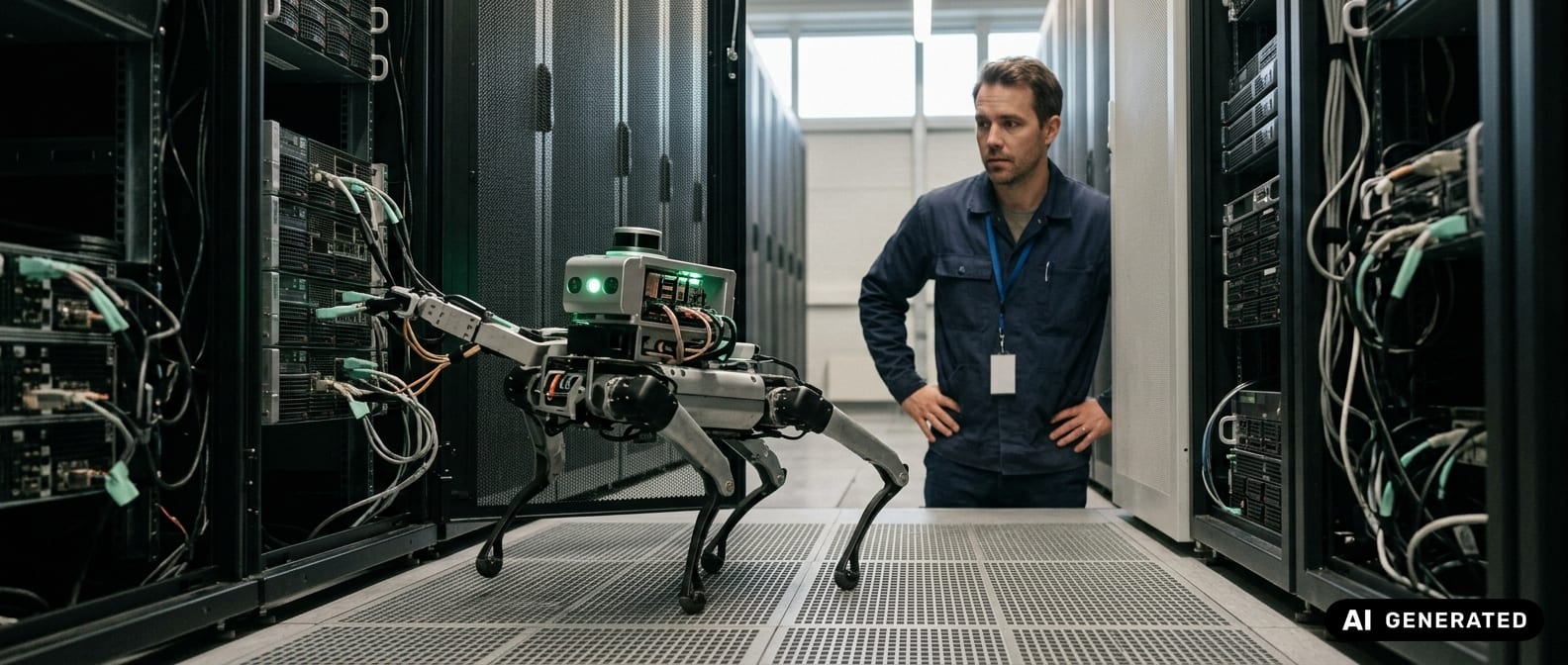
Are physical data center automation and swarms of autonomous agents pushing AI infrastructure beyond human control?
Meta is testing robots for server maintenance, while OpenAI orchestrates 10,000 agents to solve age-old problems. Amid hardware monopolies and new predictive models, AI is becoming increasingly autonomous and physical.
Read more