INSIGHT #14SundAI Blog
Is the AI wrapper era really over?
AuthorFabrizio Mazzei3/22/20266 min read

TL;DR
"The artificial intelligence market is undergoing a genetic mutation, shifting away from lightweight API wrappers toward autonomous, open-source agents. Here is how local execution and enterprise infrastructure are radically changing the way I write code."
Loading audio player...
The artificial intelligence market is undergoing a genetic mutation. Building lightweight wrappers around third-party APIs is a dead business model. This week I saw old certainties collapse and new architectural paradigms emerge that will radically change the way I write code and design automations.
The dependence on large cloud providers is showing its economic and technical limits. Companies developing vertical tools are realizing that to survive and scale they must get their hands dirty with open source, local optimization, and total control of the infrastructure.
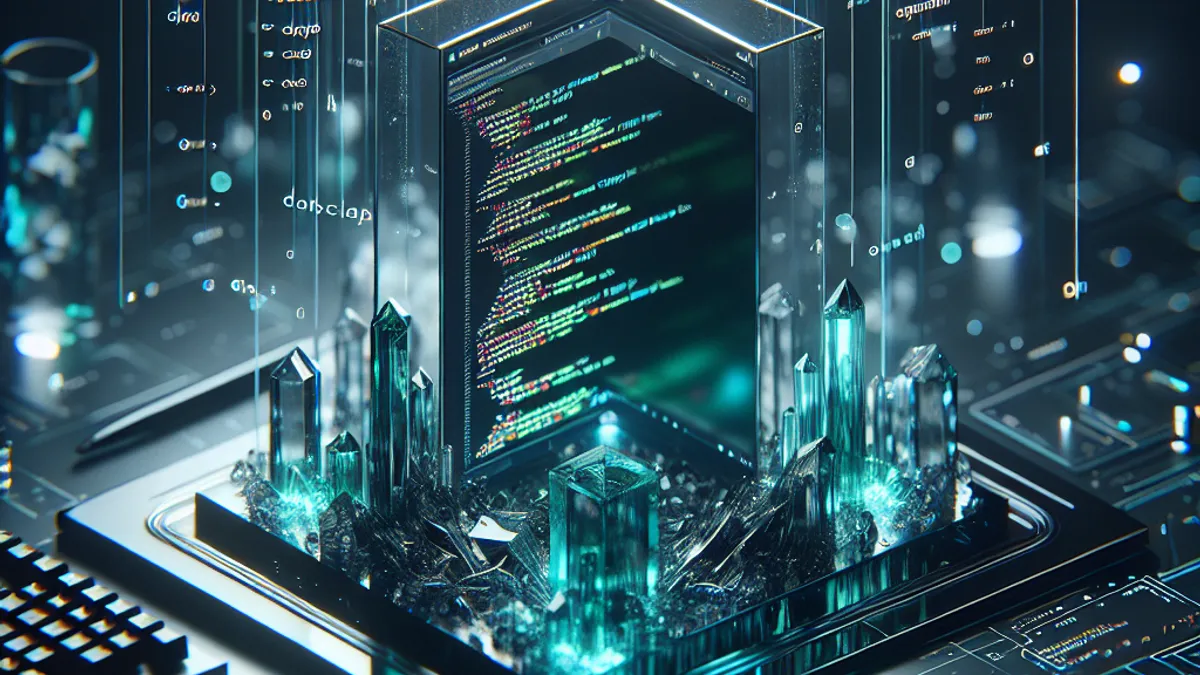 Image generated entirely with AI.
The IDE becomes an agent: Cursor, Kimi and the acquisition of Astral
I use Cursor every day and the latest update literally blew me away. The team released Composer 2, the next generation of their autocomplete model, making an unexpected choice: the engine under the hood is based on the Chinese open-source model Kimi K2.5.
Adopting a custom open-source architecture is a brilliant move to cut inference costs. OpenAI APIs for intensive development tasks were becoming unsustainable. I tested the new model on my most complex codebases and the multi-file context understanding easily rivals Claude 3.5 Sonnet. Chinese models are demonstrating impressive technical maturity in logical reasoning.
But the real war is fought over the control of the entire software lifecycle. A few days ago, OpenAI responded by acquiring Astral, the team behind widely used tools like Ruff and uv. The goal is clear: integrate the best Python practices directly into the Codex project.
Integrating the performance of Astral into the models means creating agents capable of real-time linting and formatting during code generation. This drastically cuts refactoring times and transforms artificial intelligence from a simple prompter to a real software engineer.
Total control passes through local execution with Goose
The evolution of assisted coding took another decisive step with the release of Goose, a new fully open-source agent. This tool goes beyond the concept of autocomplete to operate autonomously within the local development environment.
I installed Goose on my workstation to test its real autonomy. Executing tasks locally eliminates the typical latency of cloud-based solutions and gives me back total control over the source code. Absolute privacy on corporate data is no longer a luxury, but a standard accessible to anyone.
I find the direct integration with the terminal to be the real killer feature of this release. Entrusting dependency management to a local agent frees up precious time. As I have already analyzed in the past, AI steps out of the browser and takes control of the terminal bringing automation to an unprecedented level of depth.
 Image generated entirely with AI.
Enterprise infrastructure and cost management with NemoClaw
The era of simple text chatbots is over. Autonomous agents are the real operational engine and Nvidia confirmed this at GTC 2026 by presenting NemoClaw. This open-source platform is explicitly designed to make agents highly scalable within enterprise infrastructures.
Dominating the hardware is no longer enough. We need a reliable stack to orchestrate complex tasks in total security. I will immediately start testing the integration capabilities of NemoClaw in my serverless workflows to understand how it behaves with context management and rate limits. Having an enterprise-ready framework changes the rules of the game, confirming the fall of chaotic agents and the dawn of deterministic infrastructure.
Meanwhile, OpenAI has introduced GPT-5.4 mini and nano to the market. I analyzed the specifications and the accuracy achieved in managing autonomous coding tasks is frightening. However, the update brings a sharp increase in operational costs, reaching peaks four times higher than in the past.
This price hike completely changes the engineering approach in production: building multi-model pipelines becomes mandatory — and it's the very first point that surfaces in the AI optimization consulting work I get pulled into by teams who've just seen their bill blow past budget. I will use the mini model exclusively for complex logical orchestration, delegating data extraction operations to local open-source models to keep margins sustainable.
Human interaction between imperfection and real time
On the user interface front, I read a fascinating study: GPT-4.5 passed the Turing test by deceiving 73% of humans. The strategy used by the model was enlightening: simulating typos, ignoring punctuation, and acting lazy.
Programmed imperfection is not a system flaw, it is the decisive feature for creating artificial empathy.
This result shows that the Turing test is dead as an intelligence metric. The irony is obvious: I have to force models to make mistakes to make them seem human. In my generation prompts for conversational interfaces, I will immediately add similar style directives. A strategic typo converts much more in informal chat contexts. I also talk extensively about this in my book on AI, where I explain how to structure effective prompts for real use cases.
Still on the topic of interfaces, Google released MusicFX DJ, based on the Lyria RealTime diffusion model. This web tool abandons the static approach to offer an interactive experience where I can mix multiple text prompts by adjusting physical parameters via faders.
Managing a diffusion model with such low latency to allow real-time use is a formidable technical milestone. I want to see the APIs of this system as soon as possible. I already imagine integrating this dynamic generation into automated workflows for video content creation.
The tools of the week to integrate immediately
Beyond the big news, I have selected the best tools that emerged from my daily notes. I am already evaluating them to update my complete list of my AI tools.
| Tool | Practical use case |
|---|---|
| LangGraph CLI | immediate deployment of AI agents on LangSmith directly from the command line. |
| Open SWE | perfect open-source framework to structure internal enterprise programming agents without relying on external SaaS. |
| LumberChunker | innovative library to segment long documents, essential for optimizing my RAG pipelines on contracts. |
| Nemotron 3 Nano 4B | hybrid and compact model by Nvidia, ideal for running efficient local inference on edge hardware. |
The market direction is clear: artificial intelligence is moving from the generalist cloud to local devices and proprietary infrastructures. Those who know how to orchestrate these open-source models within deterministic pipelines will have an unbridgeable competitive advantage in the coming months.
Text created with AI assistance and reviewed by me.
Found it useful? I have more like this.
Every week I pick the most interesting and high-impact AI news and share them in an email recap. Subscribe so you don't miss the next one.
One email a week. Unsubscribe in one click.

Lavora Meglio con l'Intelligenza Artificiale
My practical AI guide focused on real everyday work tasks: emails, reports, slides, data, and automation. Practical examples and ready-to-use prompts to save time and work better right away.
Discover the book
Before you go, I recommend you also read these insights.

Why are AI flat-rate plans disappearing, and what should I do now?
This week marked a brutal turning point in the AI market, signaling the end of free testing and unlimited compute. We have entered an era of heavy orchestration, where architectural efficiency and autonomous agents dictate the new rules of corporate survival.
Read more
Are physical data center automation and swarms of autonomous agents pushing AI infrastructure beyond human control?
Meta is testing robots for server maintenance, while OpenAI orchestrates 10,000 agents to solve age-old problems. Amid hardware monopolies and new predictive models, AI is becoming increasingly autonomous and physical.
Read more
Will Nvidia's acquisition of Hugging Face and the boom of autonomous agents redefine the AI ecosystem?
Nvidia acquires Hugging Face, unifying hardware and open source, while AI agents officially surpass humans in token consumption. From the true business ROI according to McKinsey to LeRobot's revolution in robotics.
Read more