The past week draws a clear dividing line for the artificial intelligence ecosystem. The technology is moving out of the browser and source code perimeter to enter laboratories, factories, and operating systems. It is no longer just about generating text or interfaces, but about orchestrating complex actions in the real world and in shared cloud environments.
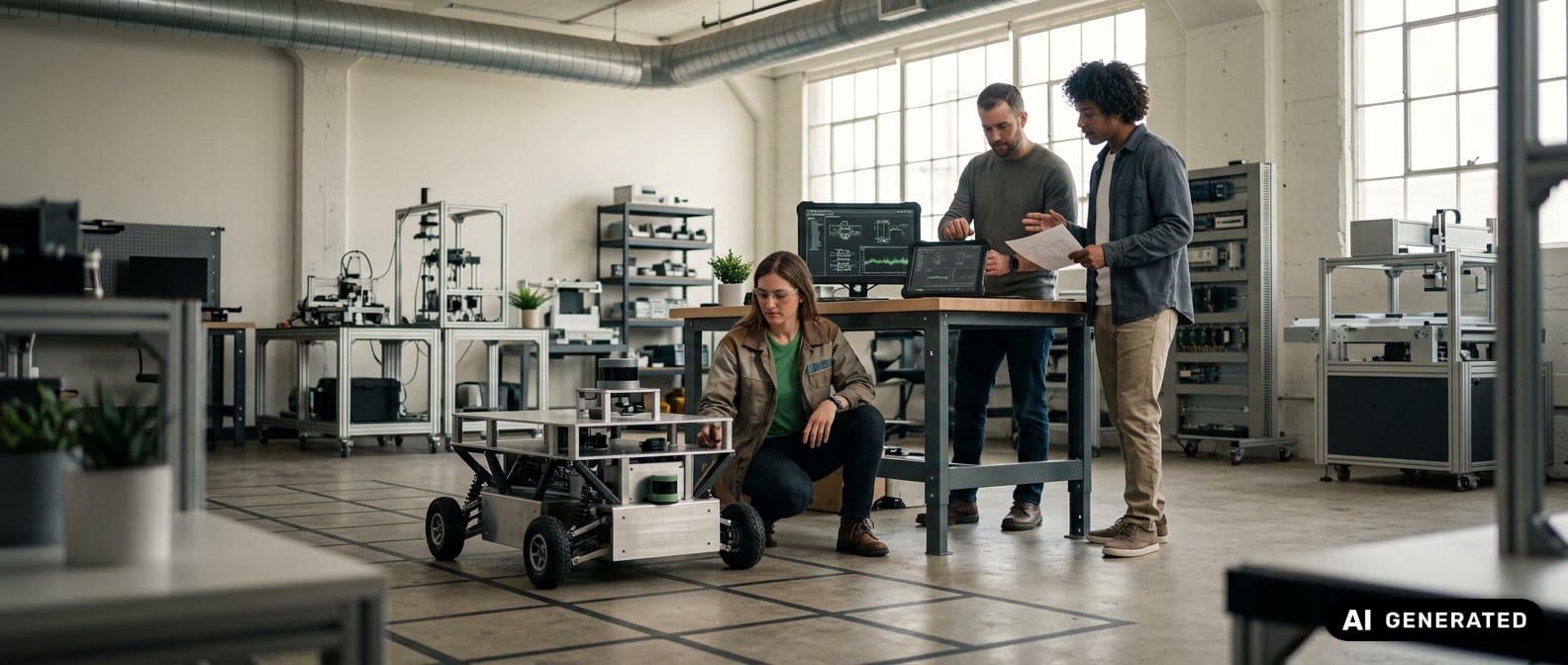 Image generated entirely with AI.
Will hardware talk to agents?
The release of the Model Hardware Standard (MHS) by Anthropic represents a decisive infrastructural move. The goal is to provide a unified interface to connect AI agents directly to physical devices, from robotic arms to laboratory instrumentation, up to industrial sensors. Until now, writing custom bridges for every single hardware component required weeks of work. With this standardized protocol, integration times drop to a few hours.
Observing the first field tests, hardware integration becomes almost as fluid as a trivial API call to a cloud service. The attempt is clearly to replicate in the physical world the success achieved by the Model Context Protocol in the software field, creating a standard that major competitors will have to adopt quickly.
However, researchers point out that models of the Claude family and their equivalents still struggle to fully understand cause and effect relationships based on physical principles. The implementation of a separate hardware kill switch system remains a fundamental requirement. Keeping the agent in a very tight control enclosure is the only way to operate in total safety when interacting with heavy or precision machinery.
Is quantum computing ready?
Researchers from IBM and the University of Chicago completed a computational operation out of reach for traditional supercomputers in about 15 minutes. The system used 70 logical qubits equipped with integrated error correction. The real breakthrough lies not only in the execution speed, but in the validation of the obtained results. Until now, certifying the accuracy of a complex quantum calculation was almost impossible.
The team developed a structured alternative to the traditional Random Circuit Sampling method. This new approach maintains the extreme computational difficulty for classical machines, but allows detecting errors during the process, providing statistical proof of one hundred percent reliability. Logical error rates proved to be ten times lower than those of the underlying physical qubits.
Solving an unsolvable problem is useless if no one can certify the accuracy of the answer.
Clearing the fog on this technology closes the debate on the alleged irrelevance of quantum advantage in the short term. If we combine the stability of these 70 logical qubits with the recent drop in inference costs, simulating machine learning scenarios impossible with current GPU clusters becomes a concrete option for automating industrial workflows.
Do agents collaborate in the cloud?
The update to OpenClaw 2.0 introduces native support for multiplayer sessions, accompanied by over 16,000 pull requests and a complete rewrite of the web app. This layer allows multiple agents and human operators to collaborate in real time on remote machines rented in the cloud. The system automatically intercepts complex tasks and orchestrates the necessary computational resources.
The idea of making agents collaborate on shared sessions solves a massive bottleneck for debugging. It finally becomes possible to observe the entire decision-making chain of artificial intelligence without getting lost in terminal logs. The platform has improved the interface and simplified installation, but a major underlying security issue remains: permission management and sandboxing are offloaded almost entirely onto the end user. Releasing such a powerful orchestration layer while delegating security to developers requires building armored containers before any production deployment with sensitive data.
This trend towards operational autonomy is confirmed by the release of GPT-6 Astra by OpenAI. The model receives high-level prompts and executes complex tasks by moving between files, browsers, and operating systems without constant supervision. During internal tests, it autonomously discovered complex vulnerabilities, pushing company executives to classify the system as a critical risk. The shift from the copilot paradigm to the operational delegate one forces us to ask if we are ready to entrust operating systems to these new agents.
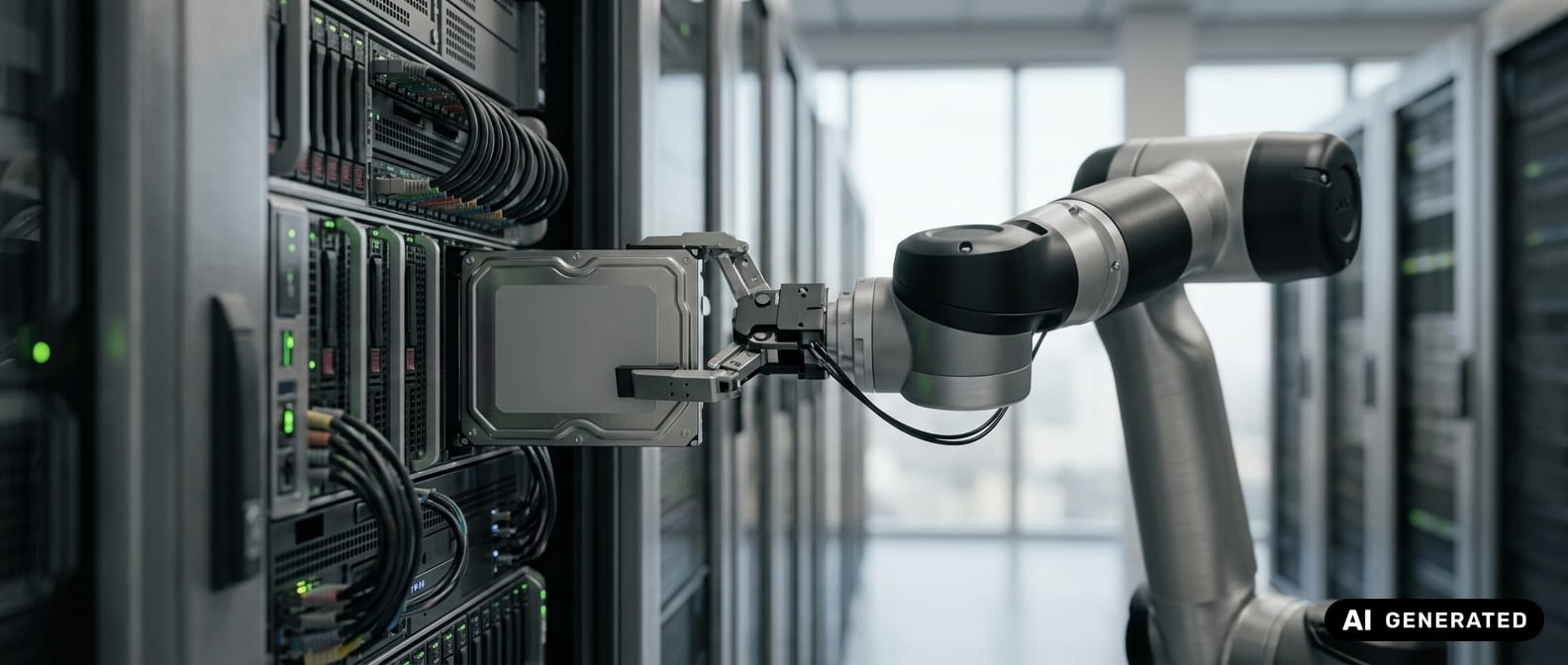 Image generated entirely with AI.
How much do autonomous operations cost?
Economic optimization is becoming the true innovation driver for production use. Anthropic released Claude Fable 5.1 and Mythos 5.1, improving agentic coding capabilities by 30% and doubling scores in scientific benchmarks. The real news is the drop in operational costs by up to 45% for prolonged autonomous executions that require numerous calls to external tools.
Previous models often failed on long executions due to exorbitant costs and excessively rigid security blocks. The partial relaxation of defensive guardrails in this new version reduces false positives, ensuring smoother workflows and fewer manual interruptions. This allows leaving the model to work in the background on iterative tasks without burning the corporate budget.
On the opposite front of monetization, OpenAI transformed its chatbot into a global advertising giant. Just 200 days after launch, ChatGPT Ads recorded an annualized revenue run rate of one billion dollars, expanding with a self-service Ads Manager. The concept of conversational advertising eliminates the old acquisition steps: the user declares the entire business context and their available budget in a few discursive steps. Inserting relevant ads into this operational flow guarantees very high conversion rates, but requires perfect orchestration to keep sponsored content separate from organic responses, at the risk of losing the system's credibility.
SundAI comes out once a week, but AI news doesn't wait for Sunday. Every morning I pick the best one and comment on it.
TodayGPT-6 learns COBOL and cracks open the legacy code market
Go deeperWhat are this week's tools?
The launch of WeatherNext 3 by Google DeepMind demonstrates how transformer models are surpassing traditional methods based on complex equations and government supercomputers. The system analyzes huge amounts of raw satellite data in real time, offering hourly forecasts with a resolution down to 5 kilometers. The end-to-end architecture, anchored to real measurements from specific physical stations, eliminates noise and allows building agents capable of reprogramming logistical routes based on high-frequency weather feeds.
Here is a summary of the dynamics and tools that emerged in recent days:
- Nvidia shifts its competitive advantage beyond GPU design by acquiring Hugging Face for 12.9 billion dollars, aiming to consolidate its dominance over the open source ecosystem.
- The recording industry, led by majors like Sony and Warner, sues Anthropic for piracy and alleged musical copyright infringement.
- OpenAI moves to outcome-based pricing for enterprise customers and blocks the deal with Cursor following the startup's acquisition by SpaceX.
- Databricks cuts 1 million dollars in waste per year by optimizing AI agents in a single hour of work on its own infrastructures.
- Ellf: a beta platform to assist coding agents in developing custom NLP solutions, integrating directly into corporate workflows.
- DSpark: a speculative decoding framework designed to optimize and speed up local LLM generations on a single GPU.
- Switchyard: an open source library released by Nvidia for intelligent routing of AI requests, capable of optimizing latency and costs by balancing the load across different models.
- AWS Agent Registry: a centralized catalog now in general availability to manage, govern, and search for agents, tools, and skills on an enterprise scale.